 By
By 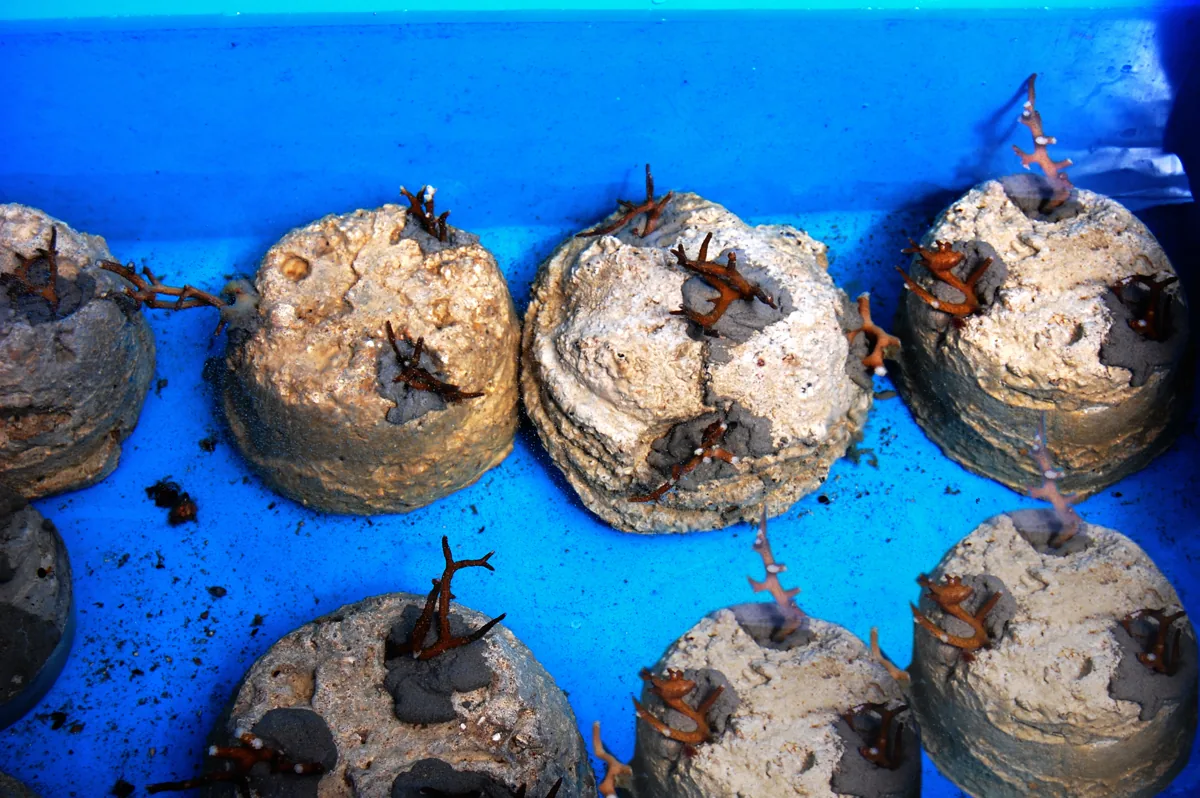
Scientists have planted experimental hybrid corals, dubbed “Flondurans,” in Dry Tortugas National Park as part of an initiative to bolster the health of Florida's coral reef system. This effort is a collaborative project involving researchers from the University of Miami Rosenstiel School of Marine, Atmospheric, and Earth Science, Mote Marine Laboratory, the Florida Fish and Wildlife Conservation Commission, and the National Park Service. The project also benefits from international partnerships with Honduran organization Tela Marine and U.S. nonprofit Tela Coral.
Experimental Hybrid Corals
The Flonduran corals are two-year-old offspring resulting from a cross between Florida Keys elkhorn corals and resilient elkhorn corals found in Tela Bay, Honduras. These Honduran elkhorns have demonstrated an ability to survive in warmer, more nutrient-rich waters than previously thought possible for the species. Researchers are hopeful that the hybrid corals will inherit these advantageous traits, potentially increasing their tolerance to changing ocean conditions.
This is a critical step in field-testing measures to help reefs adapt to increased ocean temperatures. By testing these Flonduran and Floridian corals side-by-side on different reefs, we can begin to identify suitable source populations for future breeding efforts.
Professor Andrew Baker, the principal investigator from the University of Miami and director of the Coral Reef Futures Lab, highlighted the significance of this field testing. His team developed these hybrids to explore whether introducing new genetic diversity from the Caribbean could improve the long-term resilience of Florida's remaining elkhorn coral populations.
Previous Trials and Future Monitoring
This deployment in the Dry Tortugas follows an earlier trial. In July 2025, the first Flonduran elkhorn corals were planted on an experimental reef off Key Biscayne. Regulators approved that initial test because the location's isolation by the Gulf Stream meant any potential offspring would be carried out to sea, preventing them from naturally integrating into the Florida reef tract. After one year, those corals showed positive signs of growth and survival, which paved the way for the current testing on live reefs in the Dry Tortugas.
The scientists involved will monitor the corals in the Dry Tortugas every six months. They will measure growth, survival rates, and overall health, comparing the hybrid corals directly against Florida-only corals planted at the same sites as controls. The findings from this experiment could inform restoration strategies for the entire 350-mile Florida barrier reef, which includes the 120-mile Florida Keys island chain.
Broader Implications for Coral Restoration
Elkhorn coral, once a dominant reef-building species in the Caribbean, has experienced a severe decline, with populations in the Florida Keys dropping by over 95%. Following a significant marine heat wave in 2023, Florida's elkhorn and staghorn corals were declared functionally extinct by scientists, meaning they can no longer play a substantial role in the ecosystem, reproduce successfully, or possess the genetic diversity needed for population recovery.
Antal Borcsok, co-founder of Tela Marine, views the Flondurans as more than just a restoration project. He expressed optimism about overcoming barriers to introducing coral genetics into new ecosystems, drawing parallels to long-standing practices of assisted evolution in agriculture. Borcsok also suggested that future restoration efforts might involve receiving corals from other regions.
Juli Berwald, co-founder and president of Tela Coral, who facilitated the collaboration between Baker and Borcsok, shared her enthusiasm for the Dry Tortugas planting. She emphasized the importance of international cooperation for the health of Caribbean coral reefs. Berwald stated that if the Flondurans exhibit the resilience of their Honduran parent corals and thrive in the Dry Tortugas, it could lead to a more vibrant future for elkhorn corals and the diverse marine life that depends on them for habitat. The success of this experiment, detailed further on Keys Weekly, will take years to determine, but their presence on living reefs marks a significant advancement in coral restoration science. For more information on coral reef health and conservation efforts, resources are available through organizations like Florida Realtors.